Why strength training matters as you age—and what you can do to muscle loss in women over 50 protect your future.
There is a story that has stayed with me for years. Her name was Aunt Eileen.
I watched her get weaker as the years went by. It didn’t happen overnight. Her lifestyle gradually became more sedentary. She spent much of her time watching television and reading, and she loved her ice cream. Don’t we all! Little by little, movement became less a part of her daily life.
Then she needed a cane. Eventually, she fell and broke her leg.
One of the saddest moments of my life was when I had to help make the decision to place her in a nursing home. My heart still aches when I picture her sitting in that wheelchair.
I share this story because I love her, and watching her journey changed how I think about aging.
What if we paid more attention to preserving our strength before we began losing our independence?
That is why I want women to understand something called sarcopenia.
What Is Sarcopenia?
Sarcopenia is a progressive condition involving the loss of muscle strength and muscle mass, often associated with aging. It can affect mobility, balance, and the ability to perform everyday activities.
According to the CDC, more than 1 in 4 adults age 65 and older report falling each year. Falling once doubles the risk of falling again. Muscle loss isn’t the only cause of falls, but reduced strength and physical function can contribute to the problem.
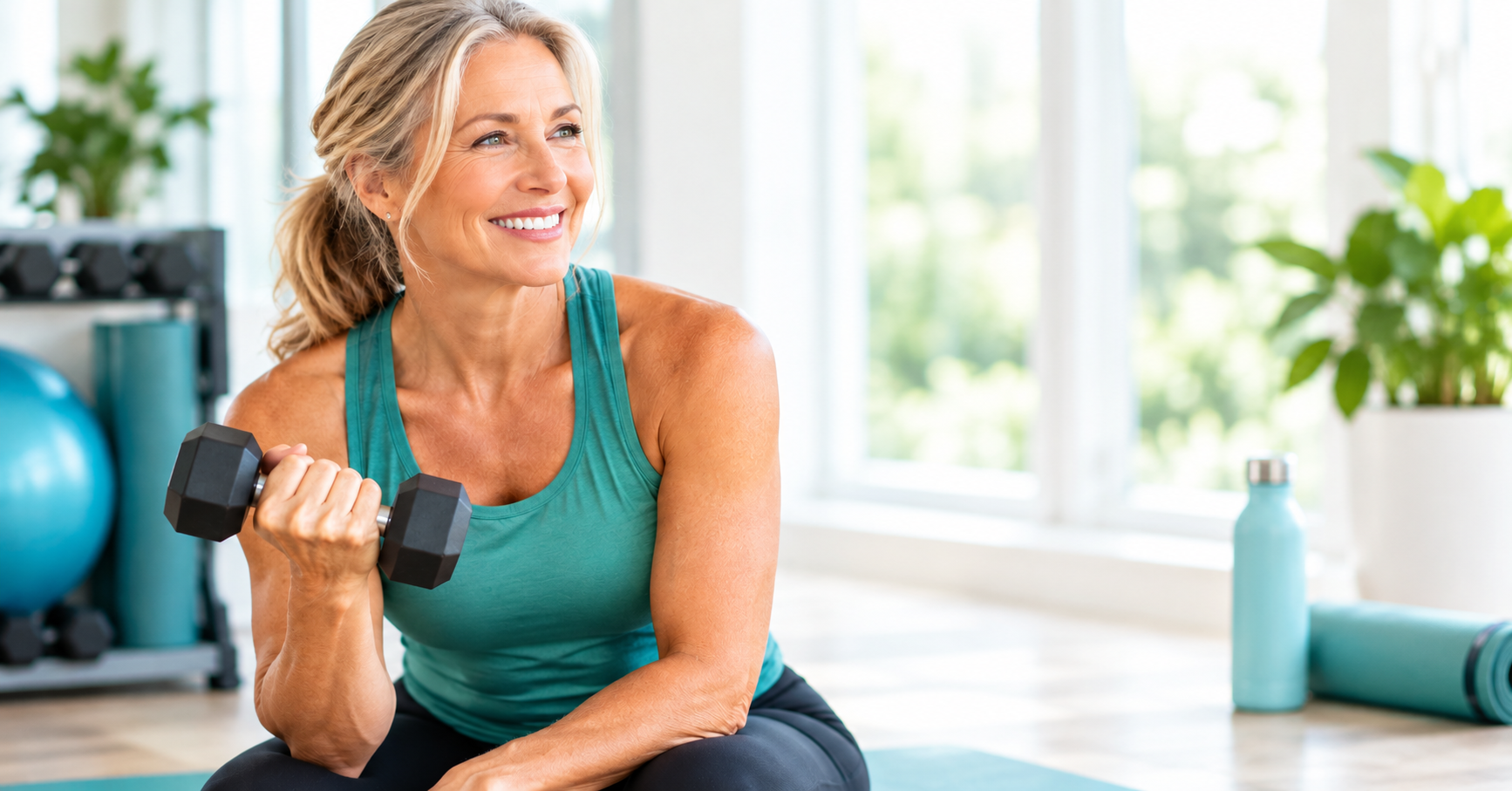
This isn’t just about looking toned. It’s about being able to climb stairs, carry groceries, get up from a chair, travel, play with grandchildren, and remain as independent as possible.
Your muscle is about much more than your appearance. It’s part of your ability to live life on your own terms.
What Causes Muscle Loss?
A sedentary lifestyle is one contributing factor, but it isn’t the only one.
Other factors include:
- Aging and hormonal changes: Muscle mass and strength can decline as we get older, particularly without regular strength-building activity.
- Inadequate nutrition: Not eating enough food or protein can make it harder to maintain muscle.
- Chronic illness: Conditions such as cancer, heart failure, and other inflammatory or chronic diseases can contribute to muscle atrophy.
- Prolonged inactivity: Bed rest, injury, or reduced mobility can accelerate muscle loss.
- Certain medications: Long-term systemic corticosteroids, such as prednisone, and some cancer treatments can contribute to muscle wasting or weakness.
With medications such as semaglutide and tirzepatide becoming increasingly popular, women need to understand an important consideration: losing weight and preserving muscle are not the same thing.
GLP-1-based medications can help eligible patients lose significant weight and may provide important health benefits. However, research indicates that a portion of the weight lost can be lean mass, which includes muscle as well as other nonfat tissues. A systematic review of clinical trials estimated that lean mass accounted for approximately 25% of total weight loss with GLP-1-based treatments.
That deserves attention, particularly for women who are already at risk of losing muscle as they age.
These medications aren’t automatically the wrong choice, and the research does not mean everyone taking them will develop sarcopenia. But weight loss should never be the only measure of success.
If you are considering or currently using a GLP-1 medication, discuss your nutritional needs, muscle strength, and exercise plan with your healthcare team. Adequate protein intake and regular resistance training are important parts of protecting muscle during weight loss.
My message is simple: before focusing exclusively on getting smaller, let’s focus on building a stronger, healthier body.
Strength Training Is an Investment in Your Future
You don’t have to wait until you feel weak to start getting stronger.
You don’t have to lift extremely heavy weights, spend hours in a gym, or follow the latest fitness trend.
You need a safe, progressive program suited to your body, abilities, and goals.
For more than 15 years, I’ve helped women through Transformed With Promise, and one thing I know is that one size does not fit all.
Some women are beginners. Others are returning to exercise after years away. Some have mobility limitations or balance concerns. Others want to preserve muscle, improve functional strength, or feel more confident in their bodies.
That’s why I provide personalized strength training tailored to the individual, both in person at my private studio and online.
The goal isn’t simply to look strong. It’s to become stronger, more capable, and better prepared for the years ahead.
Don’t Wait Until You’re Weak to Start
Aunt Eileen’s story reminds me that independence is precious.
I wish I could of helped her earlier years by providing strength training sessions, so that she could preserve her ability to stand, walk, balance, and continue doing the things she loved.
We cannot control every aspect of aging, but we can take meaningful steps to support our strength, mobility, and physical function. This choice has to be our own. I encourage you to never give up. Keep moving. There will be a day when you look back and tell yourself, “I gave it my best shot.” And that will be enough.
Don’t wait for a fall. Don’t wait until the stairs become difficult. Don’t wait until everyday activities become a struggle. Although my Aunt Eileen struggled, you would never hear her complain. The beautiful reality today is that she is without pain in the presence of God with many loved ones. And that is my reason to celebrate.
Ready to Get Stronger?
Start where you are. Start safely. Start with guidance if you need it.
If you’ve been putting off strength training because you don’t know where to begin, you’re afraid of getting hurt, or you aren’t sure what exercises are right for you, I’d love to help.
At Transformed With Promise, I offer personalized strength training for women through in-person and online coaching. You can change your future with one bold step. Reach out for your free consultation.
Let’s build the strength you need for the life you want to keep living.
Stronger bodies. Sharper mindsets. Real results.
No pressure. No judgment. Just powerful progress—and that’s a promise.